



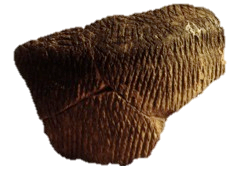
Bukit Tengkorak is one of the most significant archaeological sites in Malaysia and Southeast Asia, located in Semporna, Sabah. The site occupies a volcanic rock shelter that forms part of an ancient volcanic crater. Archaeological research has shown that Bukit Tengkorak served as the largest prehistoric pottery manufacturing centre in Southeast Asia during the Neolithic period, around 3,000 years ago, with thousands of decorated pottery fragments discovered across the site.
Systematic archaeological research began in 1994–1995 by teams from Universiti Sains Malaysia (USM) and the Sabah Museum, with earlier survey work by archaeologists such as Peter Bellwood in 1987. Excavations and artifact analysis have uncovered pottery, stone tools and animal remains, indicating that the prehistoric community at Bukit Tengkorak was not only engaged in pottery production but likely participated in maritime connections and long‑distance trade across Southeast Asia and the Pacific. Ethno‑archaeological studies also show that traditional pottery techniques are still practised by the Bajau community in Semporna today, reflecting a living cultural heritage.
 |
 |
|
 |
||