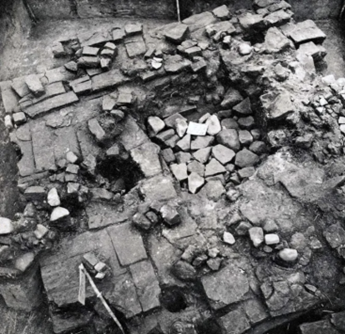
Bongkissam and Bukit Maras in Santubong, Sarawak are significant archaeological sites that illustrate Santubong’s role as an early entrepôt port and trading centre in the region. At Bongkissam, excavations have uncovered what is believed to be a ritual shrine containing gold foil figures, semi‑precious stones, beads and Hindu‑Buddhist ritual deposits, along with ceramics from the Sung, Yuan, Tang and Qing dynasties. These discoveries point to extensive trade networks and early religious influences in the area.
At Bukit Maras, archaeological work has revealed glass beads, metal objects, ceramic fragments, as well as stone figures of Buddha in the Gupta tradition and elephant motifs, indicating Indian cultural influence and Buddhist practice prior to the Islamic period. These findings demonstrate that the area was not only a hub of commerce but also a centre of cultural and religious exchange in early Borneo history.