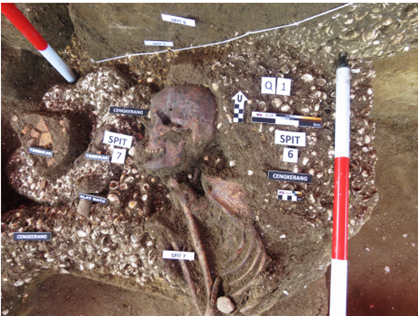
The Guar Kepah Archaeological Site is the first site in Malaysia to have undergone archaeological excavation. The site was studied and documented by British archaeologist George Windsor Earl, who discovered prehistoric evidence at Guar Kepah in the 1840s. He excavated a shell midden and uncovered human skeletal remains within the shell deposits. These remains were later sent to F.W. Huxley for further examination, who identified them as representing the Melanesian group.
In addition to human remains and food residues primarily marine shell, the site also yielded Sumatralith stone tools, pottery and other food remains such as deer bones. Based on the presence of pottery artifacts, Guar Kepah clearly represents a Neolithic culture, with the site estimated to date back approximately 5,000 to 6,000 years ago.