Busana (Attire)
Busana is defined as a complete outfit that is finely crafted and beautifully made. Berbusana refers to the state of being fully and properly dressed.
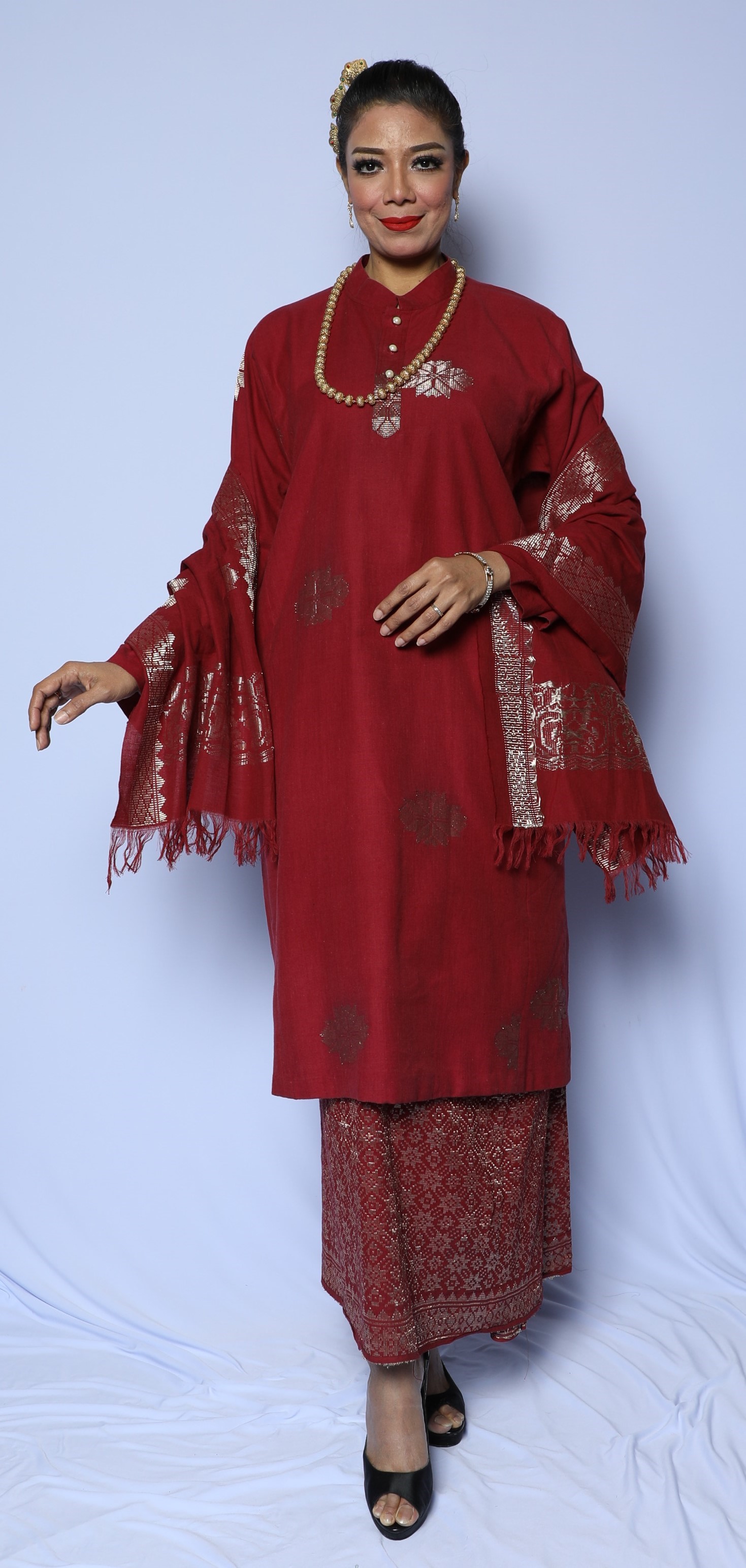
Figure 1: Traditional Baju Kurung Telok Belanga
Textiles
Textiles are defined as fabrics made by weaving threads. The weaving materials can include cotton, silk, gold threads, and more.
Songket
Songket is a traditional weaving technique in which a bamboo stick or nibung blade is used to lift the warp threads on the loom, also known as a kei. Songket is a type of handwoven fabric characterized by its intricate patterns, created with gold or silver threads. The term "songket" also refers to the process of drawing threads out from the fabric or weaving with these precious metals. The creation of songket begins with preparing the ‘karat butang’ threads, which serve as the foundation for designing patterns or embroidery in gold or silver. It is believed that songket was inspired by textile-making methods brought by Indian traders, particularly the ikat technique. These traders introduced raw materials such as gold, silver, and silk threads, as well as pre-woven fabrics.
The production of songket was inspired by textile-making methods brought by Indian traders, particularly the ikat technique. This complex technique requires exceptional skill and meticulous attention to detail. These traders introduced raw materials such as gold, silver, and silk threads, in addition to already woven fabrics.
Songket holds significant historical value as a prestigious heritage textile. Beyond enhancing the dignity of the wearer, its motifs and colours traditionally symbolize social status
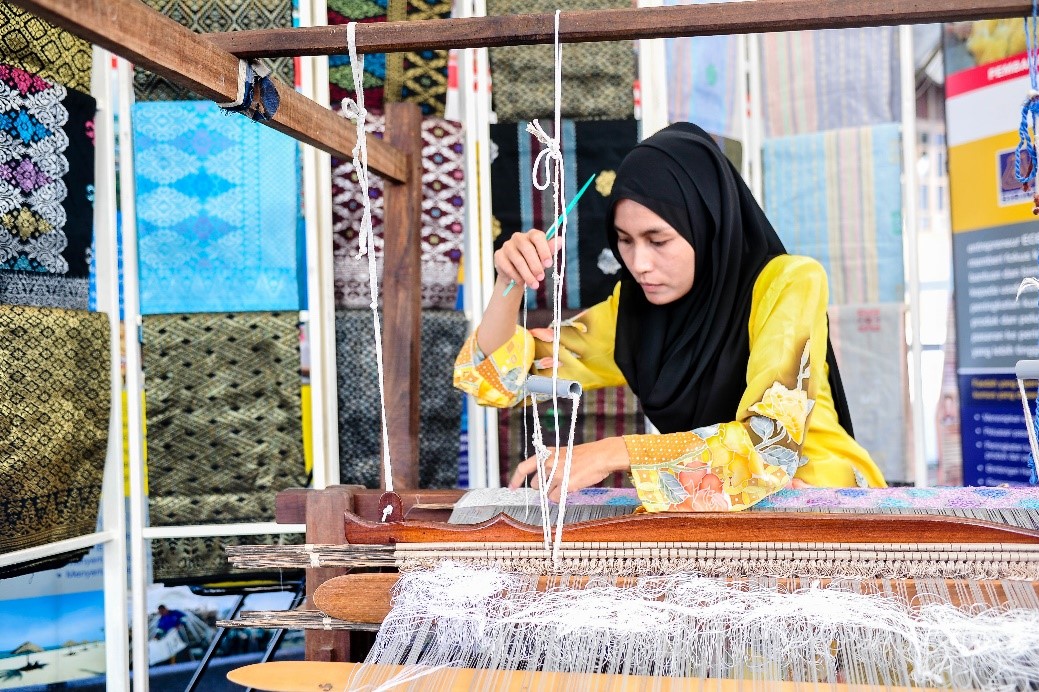
Figure 3: The process of producing songket fabric involves using a kei (or kek) loom.
Personal Adornment
Samping Tying
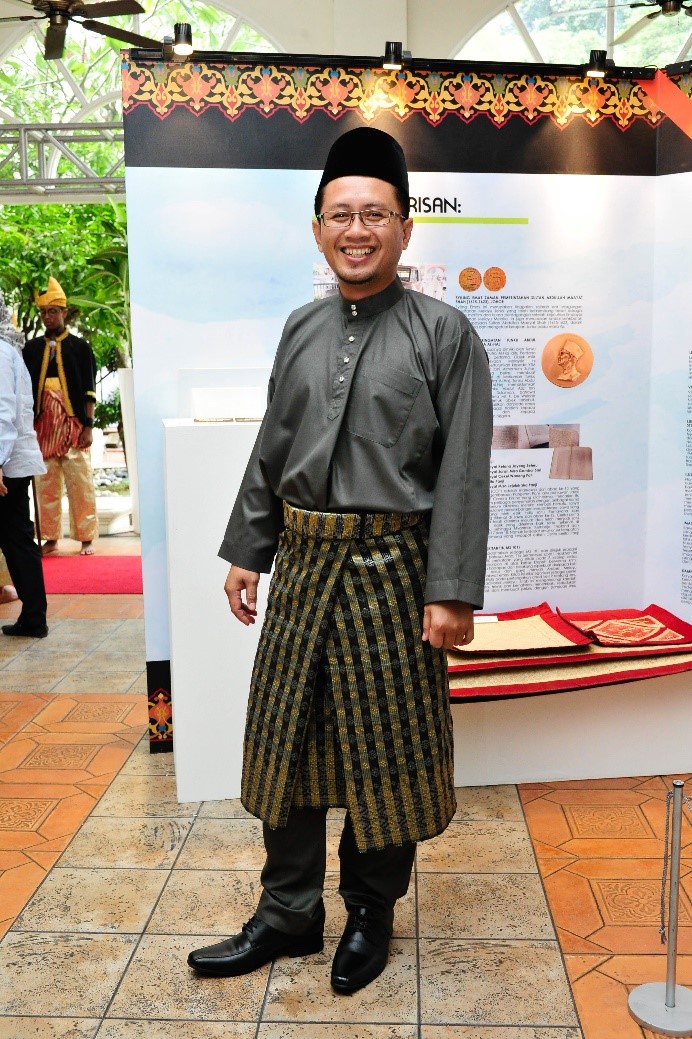
According to the Kamus Dewan, samping is a cloth worn over trousers (in Malay attire), typically extending from the waist to the knees. The term "samping" can also refer to "side" or "rib." Sometimes, the samping may consist solely of a sarong cloth. It serves as a complement to the traditional Malay outfit known as the baju Melayu. The samping is considered an essential component of male Malay attire, draped from the waist down to the knees. However, it is generally not worn by young boys, as it is typically seen as more suitable for adult men.